


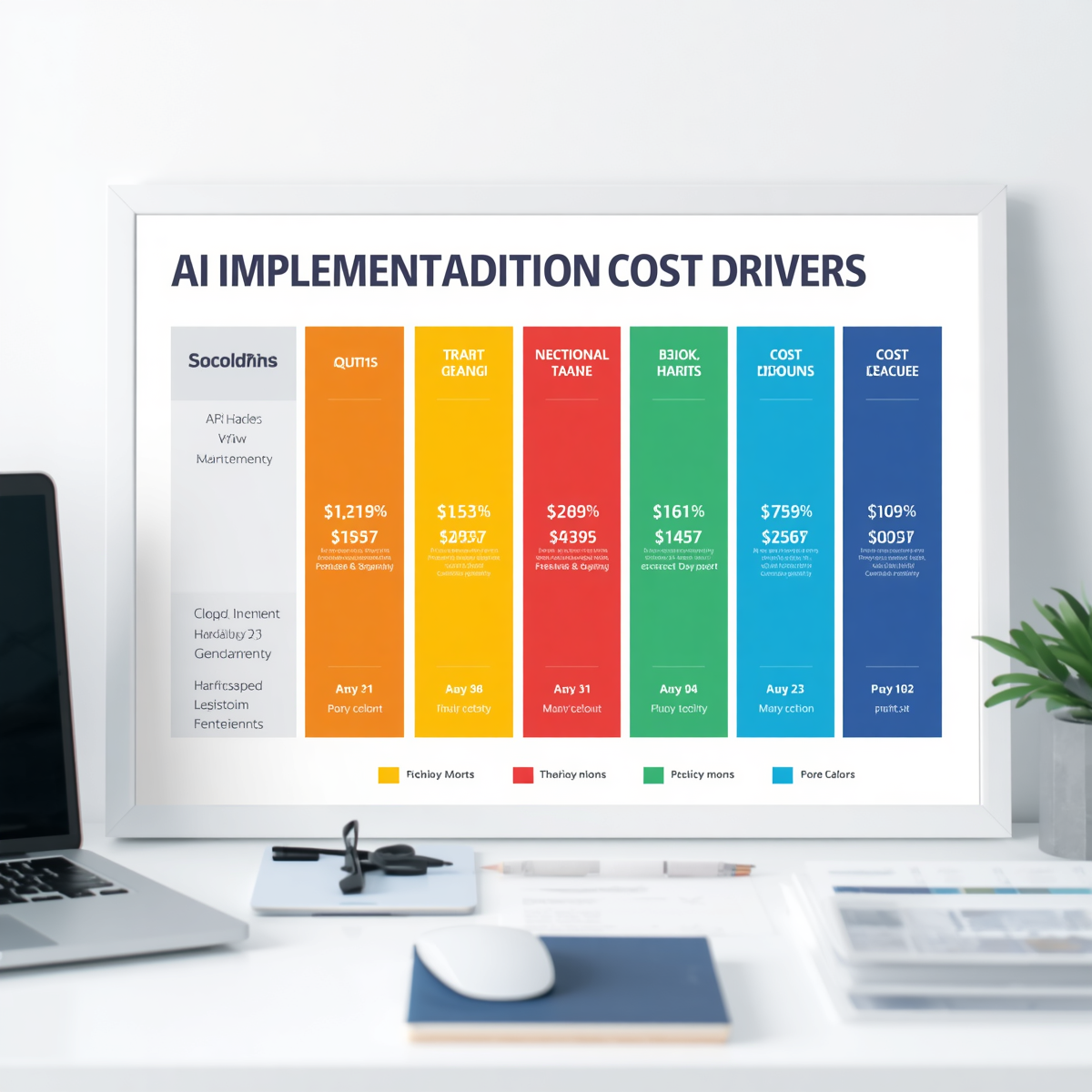
Ask five vendors what an AI implementation costs and you'll get five numbers spanning an order of magnitude — and all five might be honest. That's because the price isn't determined by "AI" as a category. It's determined by five specific drivers, and understanding them is the difference between a scoped project that ships and a budget that evaporates in discovery.
What AI implementation actually costs — and where budgets go wrong
How well-defined "working" is
The cheapest AI project is one where success is measurable before development starts. "Reduce first-response time on support tickets by handling FAQ-type queries end-to-end" is buildable and testable. "Add AI to our customer experience" is a research project wearing a product budget. Vague scope doesn't just risk overrun — it guarantees rework, because every stakeholder discovers what they actually wanted only after seeing what they didn't. Expect loosely-scoped projects to cost two to three times their initial estimate, almost entirely in rebuild cycles.
The state of your data and systems
The model is rarely the expensive part. The expensive part is everything the model needs to touch: data that lives in six systems with three definitions of "customer," an ERP with no API, documents scanned at angles no OCR enjoys. Integration and data preparation routinely consume 40–60% of an AI implementation budget. A useful pre-project exercise: for every piece of information the AI needs, ask "where does this live today, and is there an API for it?" Every "nowhere" and "no" you answer is budget.
Accuracy requirements
Cost scales non-linearly with the accuracy bar. Getting a document-extraction system to 85% accuracy might take weeks; each further point costs progressively more — evaluation datasets, edge-case handling, human review workflows, retraining loops. The strategic question isn't "how accurate can it be" but "what accuracy makes this valuable, and what's the workflow for the remainder?" A system that handles 70% of volume flawlessly and routes the rest to humans with full context is often more valuable — and dramatically cheaper — than one chasing 99%.
Model strategy and running costs
Per-token API pricing looks trivial in a demo and compounds in production. Model choice (large frontier model vs. smaller or open-weight models), caching strategy, and how much context each request carries can shift monthly running costs by 10x for identical functionality. This is a design decision, not an afterthought: systems architected around the right-sized model for each task cost a fraction of ones that route everything to the biggest model available. Budget for running costs from day one — an implementation that's affordable to build and ruinous to operate is a failed implementation on a delay.
What happens after launch
AI systems degrade without attention: usage patterns drift, edge cases accumulate, models get deprecated, prompts need tuning. Plan for 15–25% of the build cost annually in monitoring, evaluation, and iteration. Vendors who quote a build price with no operating plan are quoting you the down payment.
What a sensible v1 looks like
Across the projects we've delivered, the pattern that works is consistent: scope a v1 around one measurable outcome, ship it in six to ten weeks, prove the value, then expand. This isn't just risk management — it's cheaper in absolute terms, because everything you learn in a live v1 replaces expensive speculation in a big-bang build.
The honest summary
AI implementation cost is mostly determined before development starts — by scope clarity, data readiness, and the accuracy bar. If a vendor quotes you a price without asking hard questions about those three, the quote is fiction. If you want a grounded answer for your specific situation, our AI development team scopes projects around measurable outcomes precisely so the budget conversation happens before the spend, not after — with full-cycle engineering to handle the integration work where budgets usually hide.
How much does software testing cost?
What features should a small business actually look for in a website chatbot?
How do I know if my website needs a redesign?
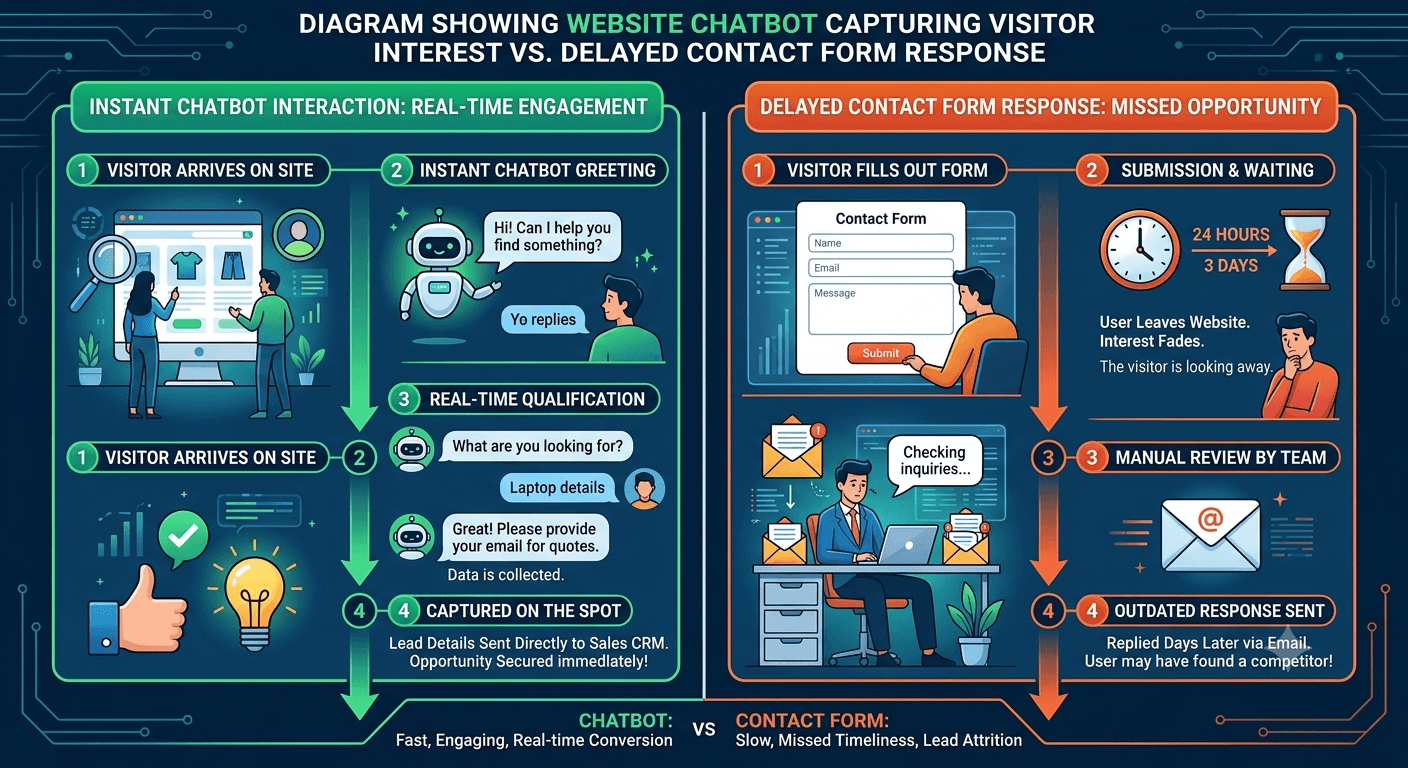
How does a website chatbot help small businesses get more leads?
