


The short answer: don't rewrite everything at once — modernize incrementally using the strangler pattern, replacing one piece of functionality at a time behind a stable interface, so the business keeps running on working software throughout the transition. The alternative — a full rewrite — is the single riskiest, most commonly failed pattern in software modernization, and it fails for predictable reasons.
How to modernize legacy software without disrupting operations
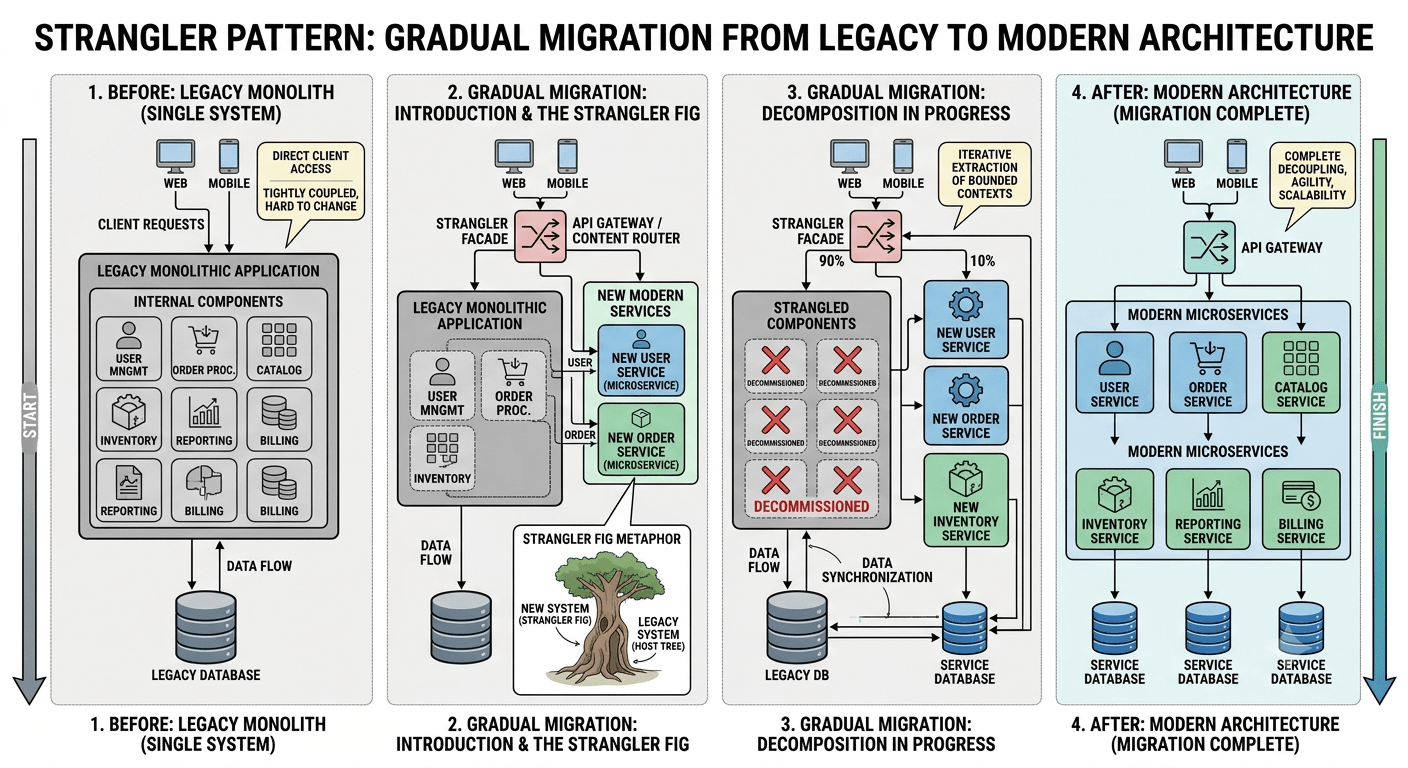
Why full rewrites usually fail
A complete rewrite requires freezing feature development on the old system, committing months or years of engineering time before any value ships, and betting the business that the new system will actually replicate everything the old one quietly did right — including edge cases nobody remembers documenting. Meanwhile, competitors keep shipping. This pattern has a long, well-documented failure history, and it's the default instinct precisely because incremental modernization is less satisfying to plan even though it's dramatically less risky.
The strangler pattern, practically applied
The strangler fig pattern (named for a plant that gradually grows around and eventually replaces its host tree) works by placing a routing layer in front of the legacy system, then migrating functionality piece by piece: build the new version of one module, route traffic to it once it's proven, and repeat. The legacy system keeps running everything not yet migrated. This means the business never depends entirely on unproven new code, and any single migration step can be rolled back without touching the rest of the system.
Choosing what to migrate first
Start with the piece that has the clearest boundaries and the least risk if something goes wrong — not the most important feature, and not the most technically interesting one. A good first migration proves the pattern works and builds confidence before tackling anything business-critical. Save the highest-risk, most tightly coupled legacy code for last, once the team has practice and the routing infrastructure is proven.
Handling the data layer
Data migration is usually the hardest part of modernization, harder than the application logic itself. Common approaches: dual-write (both old and new systems write to their own data stores during transition, with reconciliation checks), or a shared database accessed by both systems during the transition period. Whichever approach, instrument it heavily — data integrity issues discovered months after a migration are far more expensive than ones caught in week one.
Testing through the transition
Every migrated piece needs the same regression discipline as a net-new system, applied against real production-like data and traffic patterns rather than synthetic test cases — because legacy systems accumulate undocumented behavior that only surfaces under real usage. This is the same rigor we bring to QA and testing generally: a golden dataset of real scenarios, not just the happy path, catches the edge cases a rewrite would otherwise silently drop.
The practical takeaway
Modernization succeeds when it's boring: incremental, reversible, and continuously shipping value rather than betting everything on a single cutover date. If you're evaluating a legacy system that's becoming a liability, our web and application development team scopes modernization the same way we scope any project — around a measurable first milestone, not a multi-year rewrite with no value until the end.
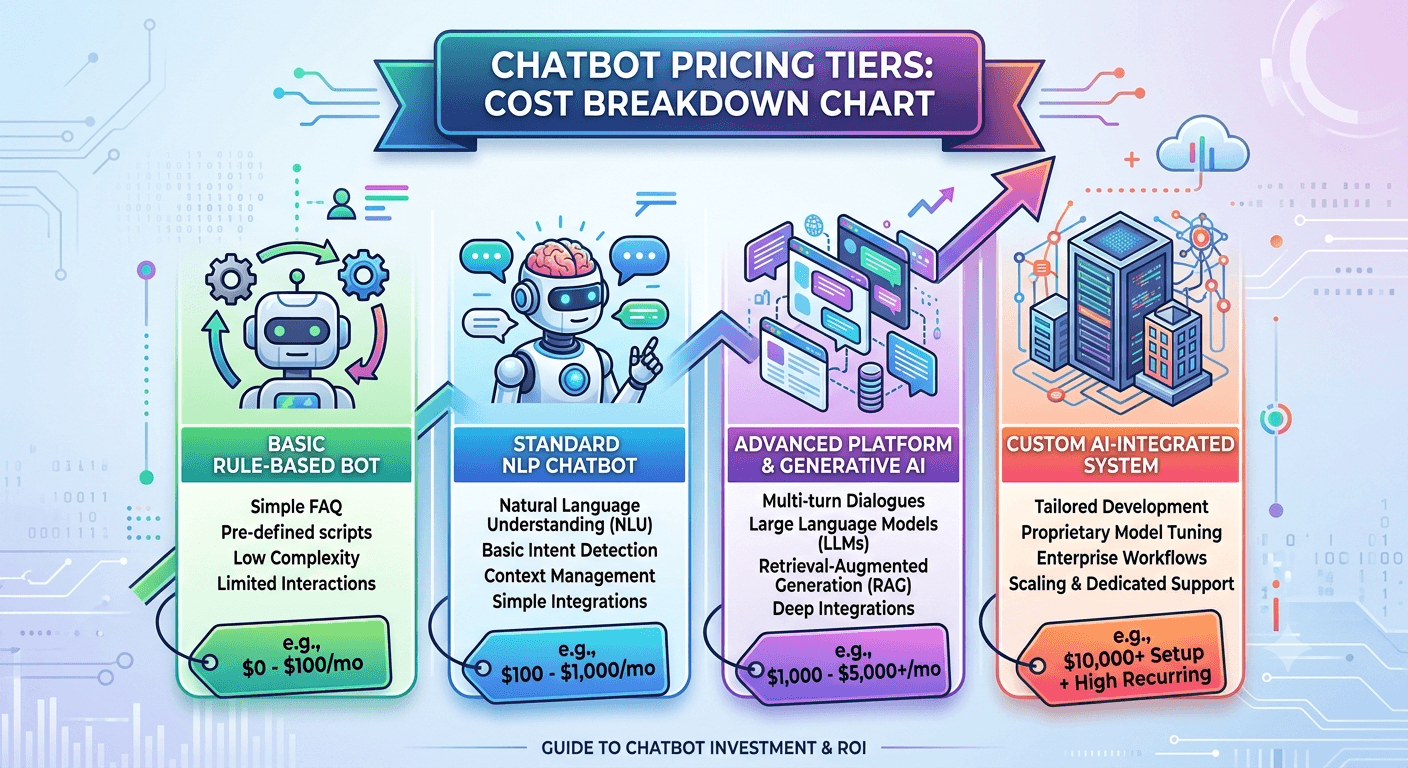
How Much Does a Custom Chatbot Cost? | Electronikmedia
How to choose a QA outsourcing partner (the questions that actually matter)
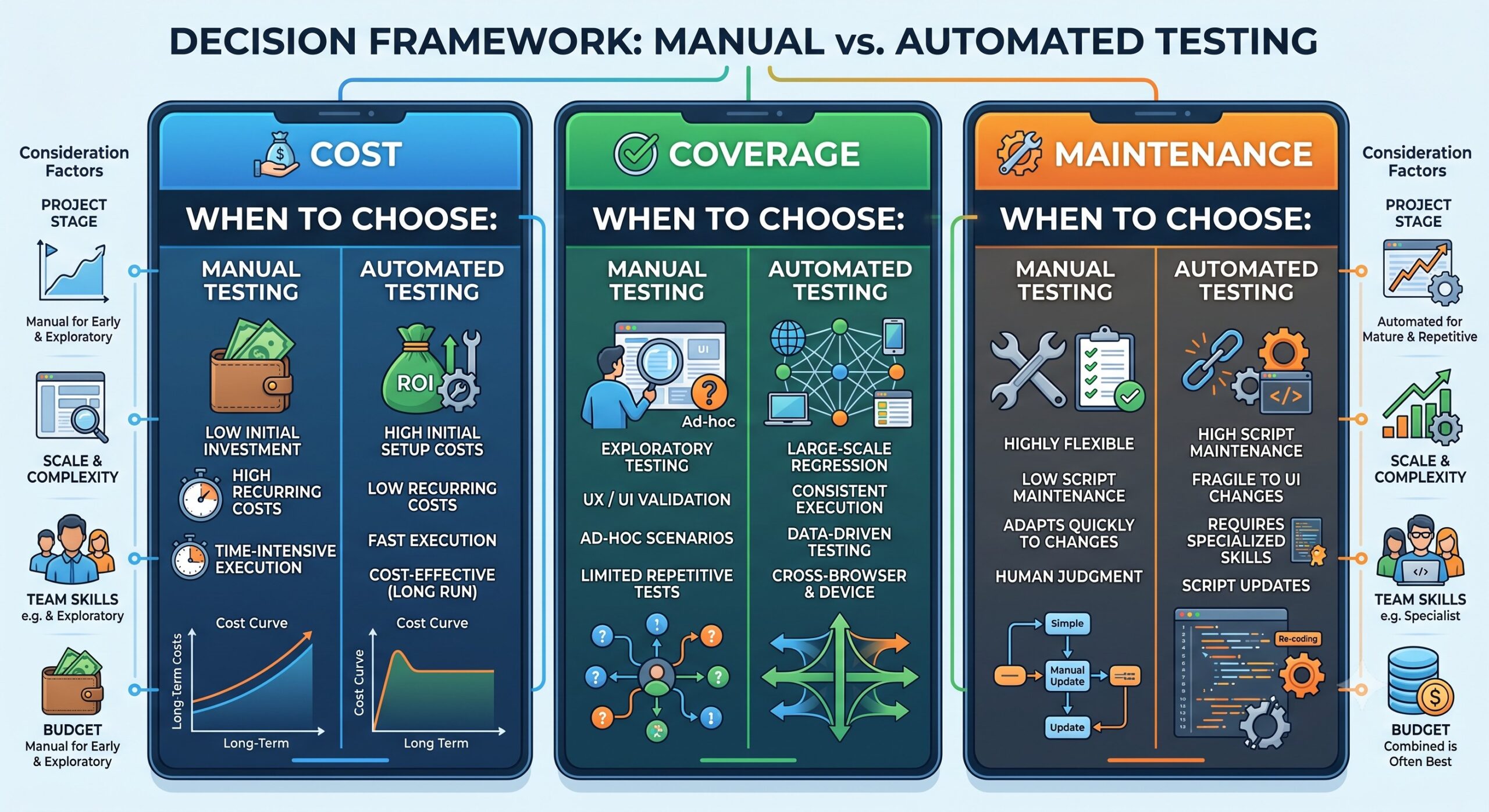
Manual vs automated testing: which does your project actually need?
What is agentic workflow QA (and why it’s different from testing a chatbot)
