


The short answer: a focused custom web application with a clearly scoped first version typically takes 8 to 16 weeks to reach a usable launch, while larger or more integration-heavy products can take 6 months to a year — the timeline is driven far more by scope clarity and integration complexity than by the size of the development team.
How long does it take to build a custom web application?
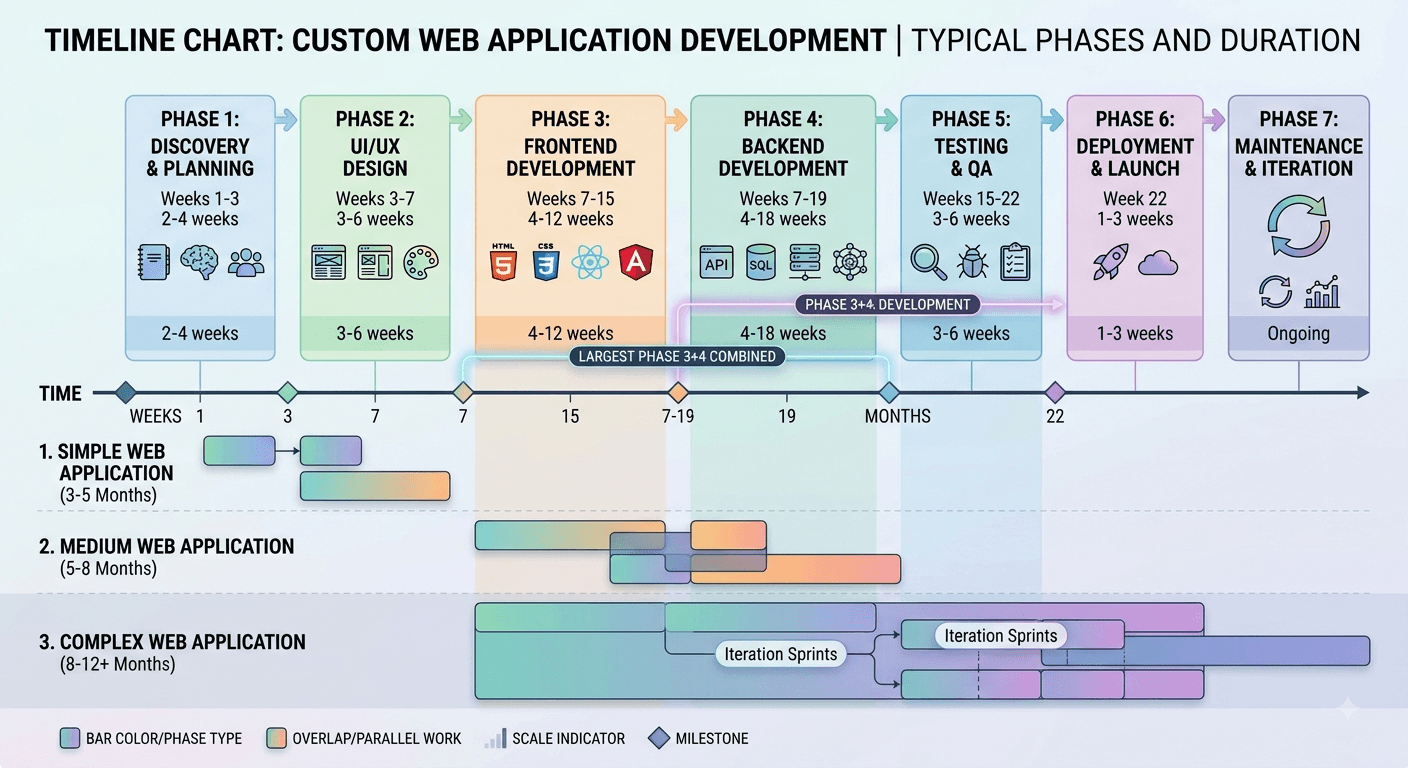
Why the range is so wide
"Custom web application" describes everything from a simple internal tool with a handful of screens to a multi-tenant SaaS platform integrating with a dozen third-party systems. Asking "how long does a web app take" without defining scope is like asking how long a building takes without saying whether it's a shed or an office tower — both honest answers, wildly different numbers.
The phases that make up a realistic timeline
Discovery and scoping (1-2 weeks): defining what the first version actually needs to do, and just as importantly, what it doesn't need to do yet. Skipping or rushing this phase is the single biggest cause of timelines blowing out later, because ambiguity discovered mid-build costs far more than ambiguity resolved upfront.
Design and architecture (1-3 weeks, often overlapping with early development): key screens, data models, and technical architecture decisions that are expensive to change later if made carelessly now.
Core development (4-10 weeks depending on scope): building the actual application, ideally in a way that produces something demonstrable early rather than everything arriving at once in the final week.
Testing and refinement (2-4 weeks, ideally running throughout rather than only at the end): the QA discipline covered in our manual vs automated testing guide applies directly here — catching issues while they're still cheap to fix.
What extends the timeline beyond the basics
Integration with existing systems (a CRM, ERP, payment processor, or legacy database) routinely adds weeks depending on how cooperative those systems' APIs are — the same dynamic covered in our chatbot integration guide applies to any application needing to connect to your real business systems. Compliance or security requirements (healthcare, finance) add review cycles. And scope creep — features added mid-build without adjusting the timeline — is the most common and most avoidable cause of delay.
How to get a realistic timeline for your project
Rather than asking "how long does a web app take," ask "what does the first version need to do, specifically, and what does it need to connect to." A vendor who can answer with a real timeline after that conversation is giving you a grounded estimate; one who quotes a timeline before knowing your scope is guessing.
The practical takeaway
Timeline is a function of scope clarity, not team size — throwing more engineers at an unclear scope doesn't reliably speed things up, and often slows things down through coordination overhead. A tightly scoped first version, shipped in weeks rather than months, both reduces risk and gets you real user feedback faster than a longer build aiming for full feature completeness on day one. Our web and mobile app development team scopes every project this way — a realistic first milestone, not an open-ended estimate.
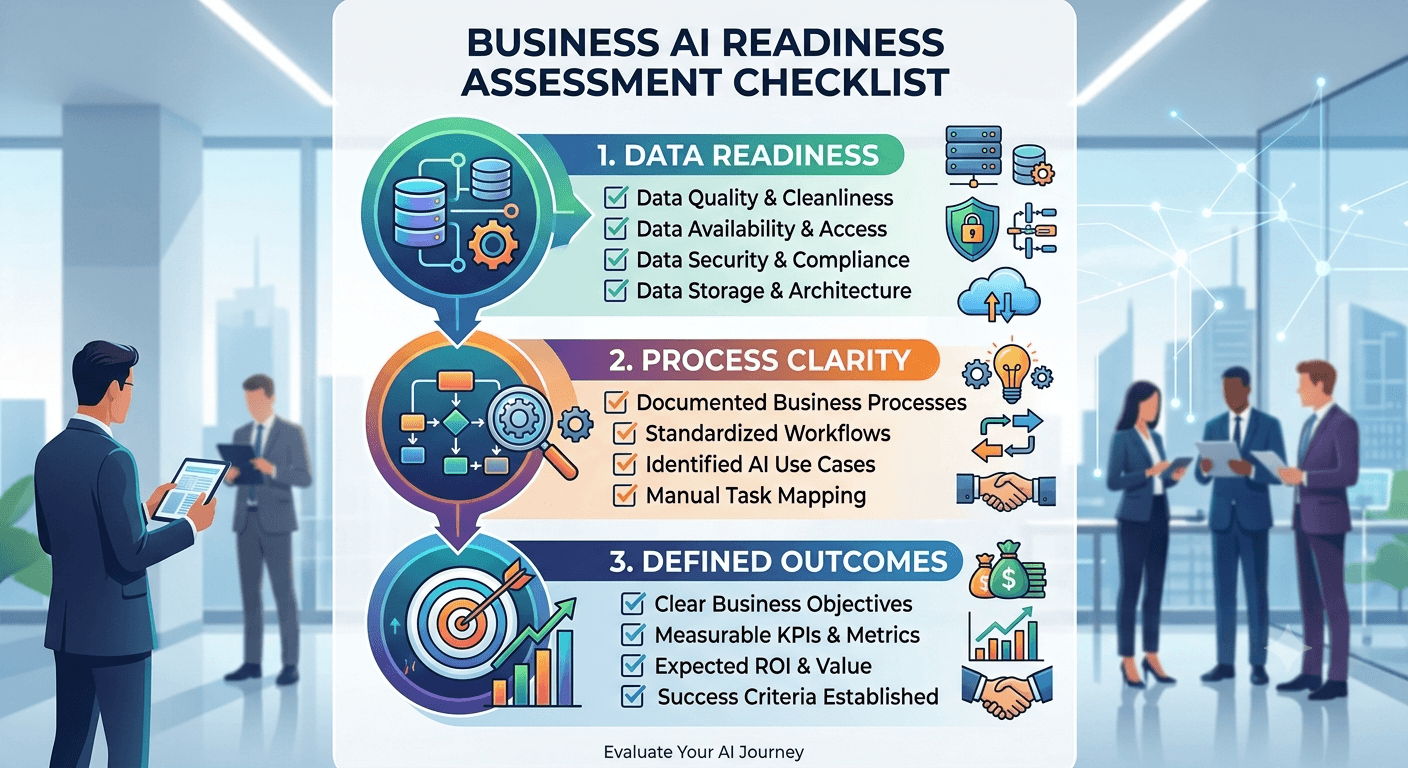
How do I know if my business is ready for AI?
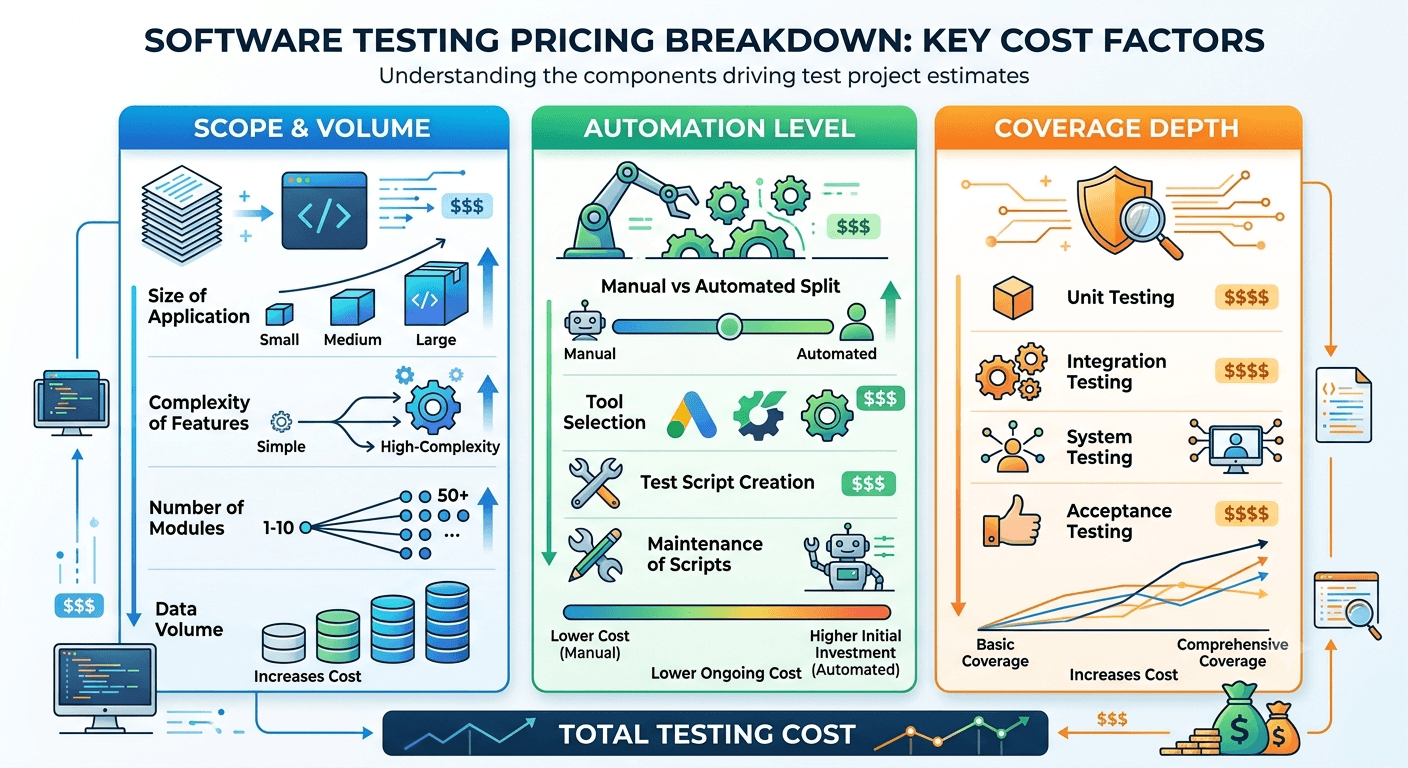
How much does software testing cost?
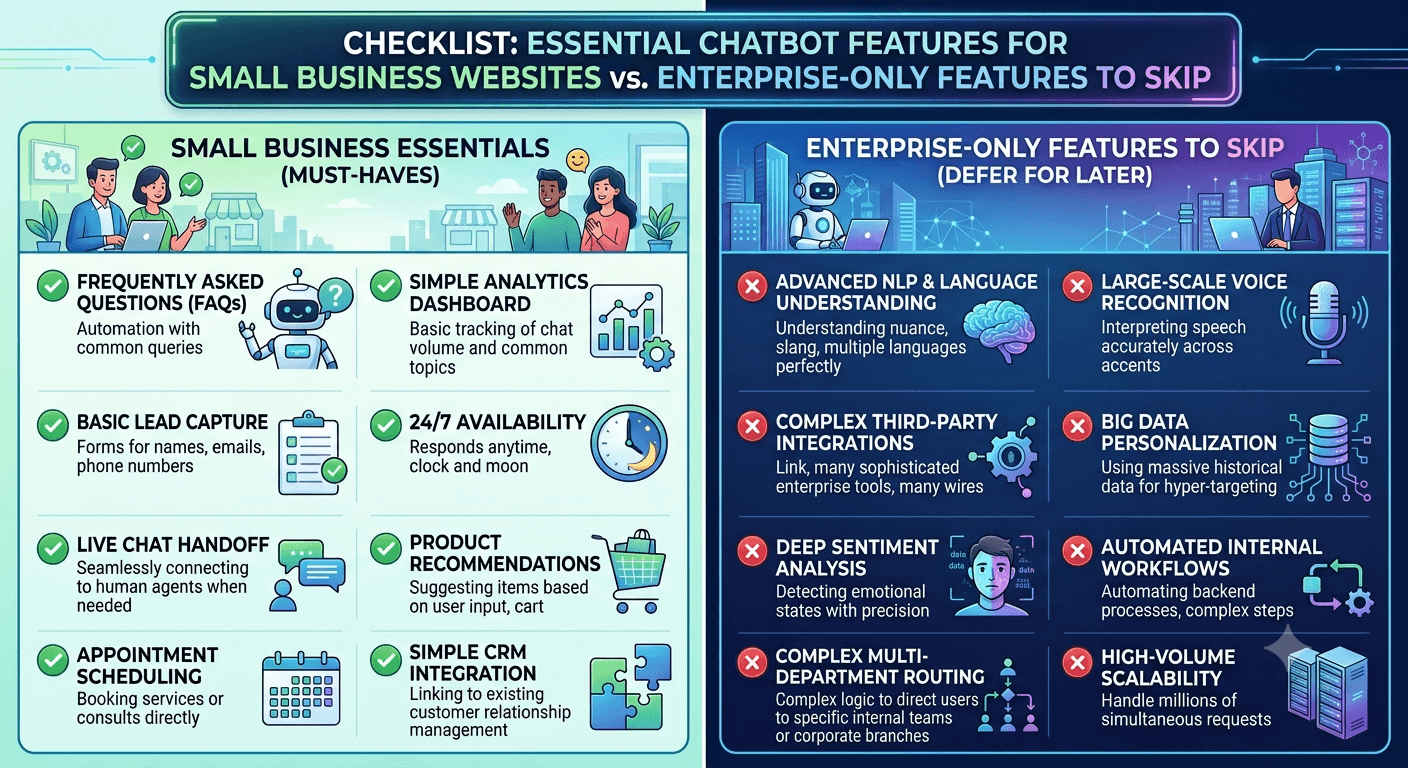
What features should a small business actually look for in a website chatbot?
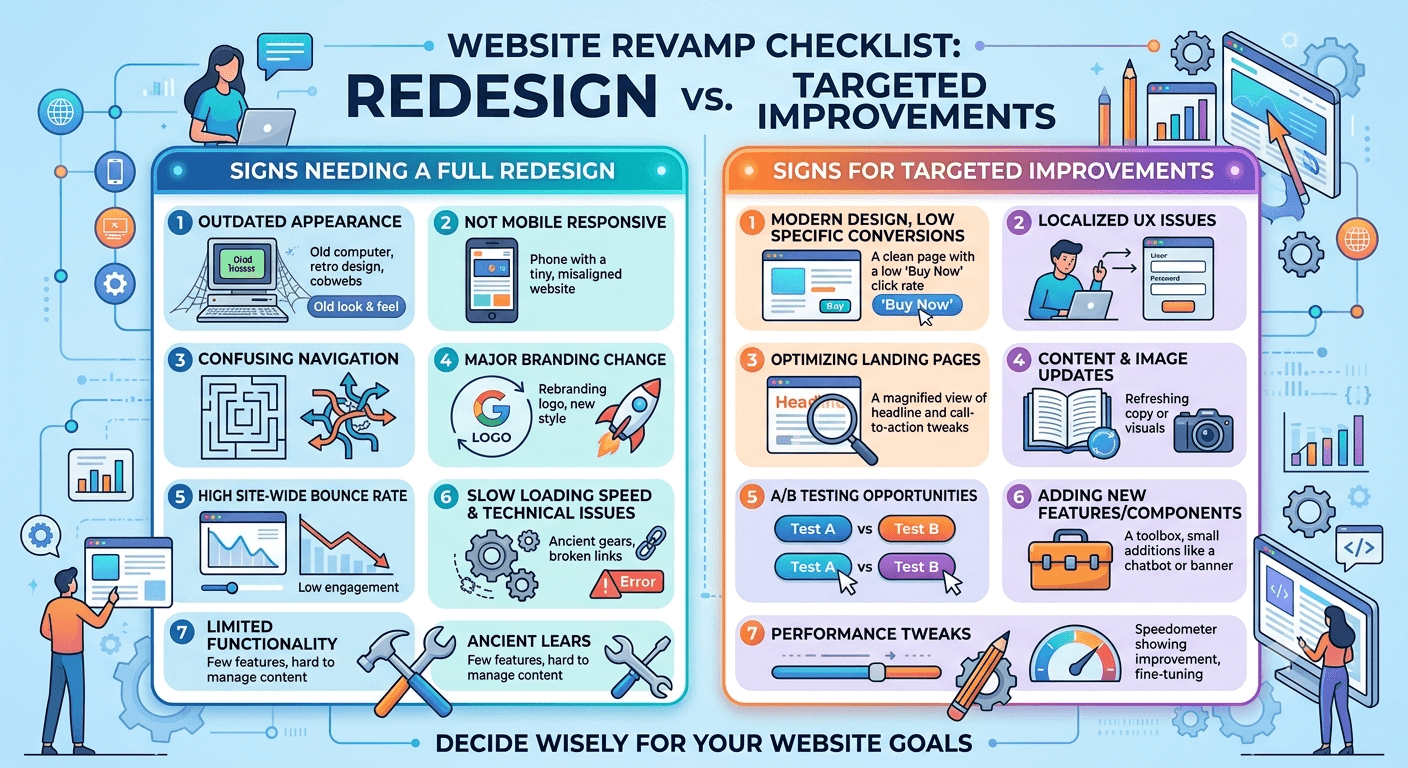
How do I know if my website needs a redesign?
