


The short answer: there is no single best model — the right choice depends on your task type, your data sensitivity requirements, your cost tolerance at scale, and how much control you need over deployment. Teams that pick a model because it topped a benchmark chart routinely end up rebuilding around a different one once real usage patterns emerge. Here's the framework we actually use when scoping AI implementations.
How to choose the right AI model for your business use case

Start with the task, not the leaderboard
Benchmarks measure general capability; your use case is specific. A model that's exceptional at open-ended reasoning may be needlessly expensive for a narrow classification task, and a smaller, cheaper model fine-tuned or well-prompted for that narrow task often performs just as well at a fraction of the cost. Before comparing models, define precisely what the system needs to do — extract structured data, hold a multi-turn conversation, write long-form content, make a judgment call — because that answer eliminates most of the field immediately.
Weigh data sensitivity honestly
If the system will process sensitive customer data, regulated information, or proprietary business data, your options narrow to providers with enterprise data-handling commitments you can actually verify (no training on your inputs, data residency guarantees, audit logs), or to self-hosted open-weight models (LLaMA, Mistral, and similar) where you control the infrastructure entirely. This isn't a minor checkbox — it's frequently the single factor that decides the shortlist before quality comparisons even start.
Calculate cost at production scale, not demo scale
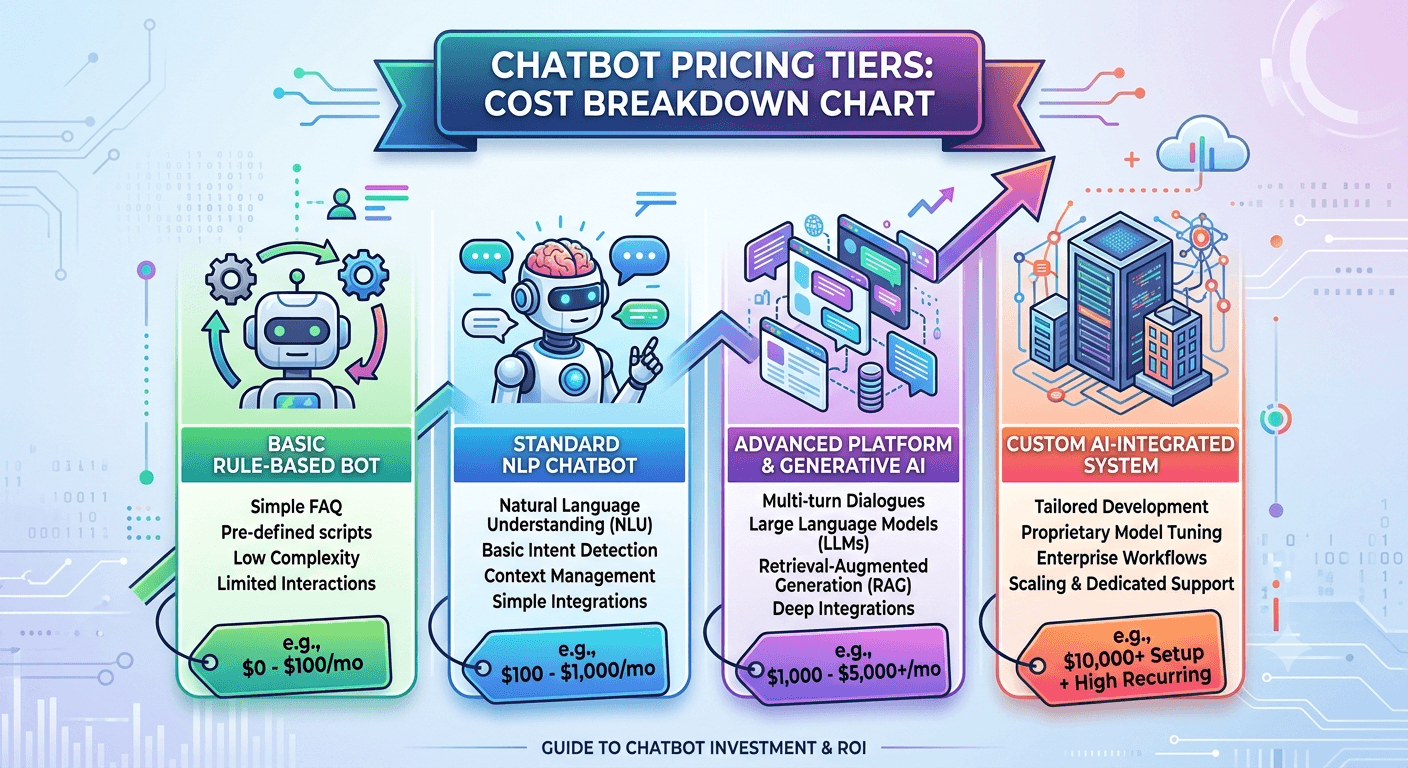
A model's per-token price looks negligible until multiplied by real production volume. The calculation that matters: expected requests per day, average tokens per request (including retrieved context, which is often the largest share), and whether caching or a smaller model for routine cases can absorb most of the volume while reserving an expensive frontier model for genuinely hard cases. We've covered this in more depth in what AI implementation actually costs — model choice is one of the biggest levers on ongoing spend, not just the upfront build.
Consider control and portability
Committing entirely to one provider's API creates switching costs if pricing changes, rate limits bite, or a model gets deprecated. Architectures that abstract the model behind your own interface layer — so swapping providers means changing a configuration, not rewriting the application — cost slightly more to build initially and save significant pain later. This matters more the longer you expect the system to run in production.
A practical shortlist approach
Rather than picking one model up front, prototype the core task against two or three candidates — typically one frontier proprietary model, one smaller/faster model from the same family, and one open-weight model if data control matters — using a real evaluation set of your own inputs, not generic benchmarks. Score them the way we described in our framework for testing AI agents: golden dataset, defined graders, and a clear bar for "good enough." The answer that comes out of that test, on your actual task, is worth more than any public leaderboard.
The mistake to avoid
The costliest mistake isn't picking the "wrong" model — most modern frontier models are strong enough for most business tasks. It's architecting the system so tightly around one specific model's quirks that changing later means a rebuild rather than a swap. Build the abstraction layer even if you're confident in your first choice; models and pricing change faster than most system lifespans.
If you're scoping a system and want the model decision made against your actual data and task rather than a marketing comparison chart, that evaluation is exactly what our AI development team runs before a line of production code gets written.
How Much Does a Custom Chatbot Cost? | Electronikmedia
How to choose a QA outsourcing partner (the questions that actually matter)
Manual vs automated testing: which does your project actually need?
What is agentic workflow QA (and why it’s different from testing a chatbot)
